UK Website Italian Website German Website

Historic Sites
Sailing & Boating
Events & Festivals
Beaches
Diving
Fishing
Water Sports
Health And Wellness
National Parks
Galleries
Historic Sites
Tours
Dining
Weddings
Honeymoons

Blue has a colorful past.

Sun and salty breezes blow by as you climb the hill high up to Fort Burt. Old sugar fields from days gone by extend all around you at Josiah’s Bay Plantation. These are just a few of the historical sites to be seen in the BVI. With such a rich past and culture, you can easily see why Blue is such a great study in history.

Callwood Rum Distillery
Island: Tortola - Cane Garden Bay
Some of the original buildings are still standing and in use. Rum continues to be made and sold in the boiling room, where the distillery's original boiler still operates, and the rum is stored in some of the original storage casks. The old guard house is also intact and has been turned into an art gallery and gift shop.


Centre for Applied Marine Studies at the H. Lavity Stoutt Community College
Island: Tortola - Road Town Area
The Centre offers education programmes, arts performances, nature trails, and a museum with displays that showcase the local natural history, as well as historical artefacts.


Fort Burt
Island: Tortola - Road Town Area
Originally built on a hill with commanding views overlooking the harbour to defend Road Town, the fort was rebuilt by the English in 1776, and named after William Burt, Governor of the Leeward Islands. Free and open daily from dawn to dusk, the foundations and magazine remain of this historic ruin.


Fort Recovery
Island: Tortola
Built in the 1640s as a military gun post, these ruins remain intact and are the oldest historical landmark in Tortola.


Josiah's Bay Plantation
Island: Tortola
Originally a sugar factory, the building at Josiah's Bay Plantation was converted into a rum distillery in the early 20th century. The machinery was powered by steam and diesel engines, examples of which can be seen on the site today. An art gallery and store are now housed in the historic building.


Main Street
Island: Tortola - Road Town Area
In addition to serving as Road Town's main shopping district, Main Street contains several historical landmarks including the Post Office built in the mid 1800s, St. Phillips Anglican Church constructed in 1840, and the Virgin Islands' Folk Museum.


Mount Healthy Windmill National Park
Island: Tortola
The 18th century windmill tower at Mount Healthy was part of an extensive sugar works once belonging to the area's wealthiest planner. Here, slaves once cultivated, harvested and processed raw cane into sugar. Other ruins on the property include the boiling house, and remnants of the animal mill round, distillery, hospital, storage shed, and housing can also be seen on private property in the area.


North Shore Shell Museum
Island: Tortola - Carrot Bay
A cluttered Carrot Bay museum with thousands of shells on display, as well as boats and various crafts.


Old Government House
Island: Tortola - Road Town Area
The recently refurbished Old Government House, a national landmark, was once the governor's residence. It is now a public museum open Monday through Friday 9AM to 2PM.


Saba Rock Nautical Museum and Gift Shop
Island: Saba Rock
Owned and operator by renowned diver Bert Kilbride, the museum showcases artefacts from the wreck of The Rhone, as well as other shipwrecks. Unique jewellery and other gifts are for sale.


St. Phillips Anglican Church
Island: Tortola - Road Town Area
Constructed in 1840, St. Phillips is said to be the first church built for liberated Africans in all the Americas and it will undergo a complete restoration in the near future.


The Dungeon
Island: Tortola
Located in Pockwood Pond, halfway between Road Town and West End, this fort was built in 1794 and housed a garrison of soldiers responsible for protecting the islands.


Thornton Plantation
Island: Tortola
This plantation was the birthplace of one of Tortola's most famous sons. Architect William Thornton prepared his first plans for the new United States Capitol building here. Ruins of the Thornton family's Pleasant Valley sugar factory still stand.


Vigilant
Island: Tortola
Vigilant, a traditionally styled 25-foot wooden boat, is one of just three original Tortola sloops remaining in the BVI. Since the 18th century, sloops such as this have carried trade goods and provided a means of communication amongst the islands. Vigilant was one of the fastest, and a familiar sight on the Sir Francis Drake Channel.


Virgin Island Folk Museum
Island: Tortola - Road Town Area
Located on Main Street just past The Plaza, the Virgin Island Folk Museum has some Arawak and Carib pottery and stone tools, including a decorated spindle, wreck of The Rhone and H.M.S. Nymph artefacts, plantation items and reef conservation information. This small museum also sells t-shirts, paintings, maps, and gifts.


Zion Hill Chapel
Island: Tortola - West End / Soper's Hole
An early 19th century chapel, built atop Zion Hill, was the site of celebration on the Day of Emancipation in 1834. After being periodically destroyed by hurricanes, it was replaced with the present Methodist chapel, a fine example of West Indian simplicity built in pasture land at the foot of Zion Hill. It has served both as a church and school.

History Itinerary

The history of the BVI is as complex and fascinating as the people themselves. You can discover the history through museums and historic sites, or living histories like historic reenactments and festivals. The story of the British Virgin Islands is alive –come and explore.

Day One - Tortola
Start on Main Street in Road Town, at the Virgin Islands Folk Museum. It houses a fine collection of Amerindian, Plantation era and RMS Rhone artifacts. Also on Main Street is the Post Office, built in the mid-1800’s and St. Phillips Anglican Church, built in 1840.

The recently restored Old Government House was originally the Governor’s Residence. It is now a public museum.

Walk down to the Harbor area for lunch, where street vendors prepare classic Caribbean dishes like rotis, fungi and curries.

Fort Burt once guarded the mouth of Road Harbour. Now it’s a hotel, and only the foundations and the magazine remain. Fort Recovery, at the West End, is the BVI’s oldest intact structure. It has a turreted gun emplacement with impressive three-foot thick walls.

Living history can be experienced at the Callwood Rum Distillery at Cane Garden Bay. The distillery, in a stone Plantation Era building, still produces rum in much the same way as it did two centuries ago. The old guard house has been turned into an art gallery and gift shop.

The BVI’s biggest festival celebrates the 1834 Emancipation Act, that abolished slavery in the British West Indies. The August festival is an annual highlight with parties, dances, parades and live shows. It’s a visual experience, coupled with the tantalizing aromas of Caribbean delicacies and the sound of joyful laughter and music.

Day Two -Virgin Gorda
Little Fort National Park on Virgin Gorda is just south of Yacht Harbour. It was the site of a Spanish fortress and some masonry walls still exist on the hillside, including the ruins of a structure called the Powder House. The 36-acre area is also a wildlife sanctuary, where you can see some amazing and unique flora and fauna.

The Coppermine was operated by Cornish miners between 1838 and 1867, and perhaps earlier by the Spanish. Today, the remains of the chimney, boiler house, cistern and mine shafts can be seen in this picturesque ruin with beautiful views of the sea.

Day Three - Jost Van Dyke
On Great Harbour, check out the sweetest village of picturesque wooden houses from a bygone era, right on a sandy beach.

And on Jost, history is very real with Foxy and his passion for keeping boatbuilding traditions alive. Foxy, who was a fisherman before becoming a host and entertainer, started the Endeavour II project. Local teens are building a classic 32’ island sloop using modern tools and building techniques. Grab a mango sherbet at the ice cream shop and stop in and chat with the team.

Day Four - The RMS Rhone
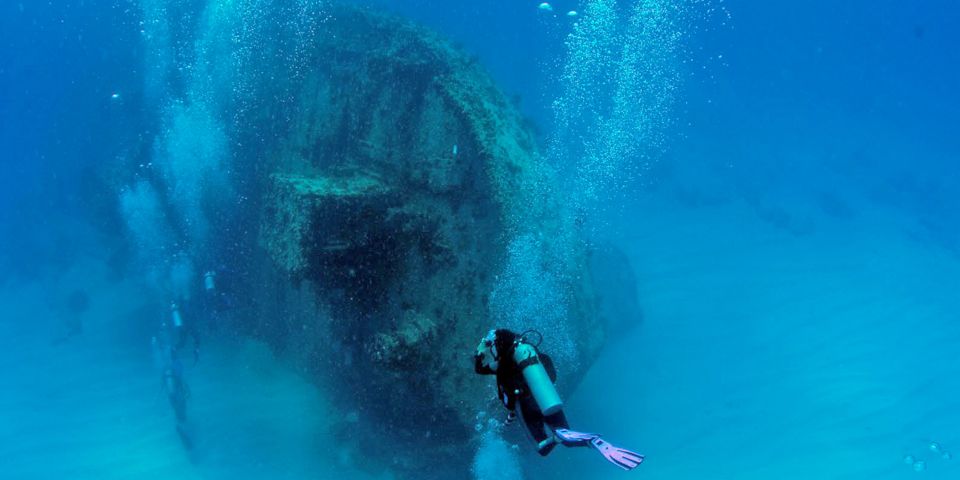
The Rhone was a 310’ Royal Mail Ship that was dashed against the rocks off Salt Island during an 1867 hurricane. Now a National Park, its remains have become a fascinating underwater habitat for marine life. To explore the mysteries properly, bring snorkeling or diving gear.